
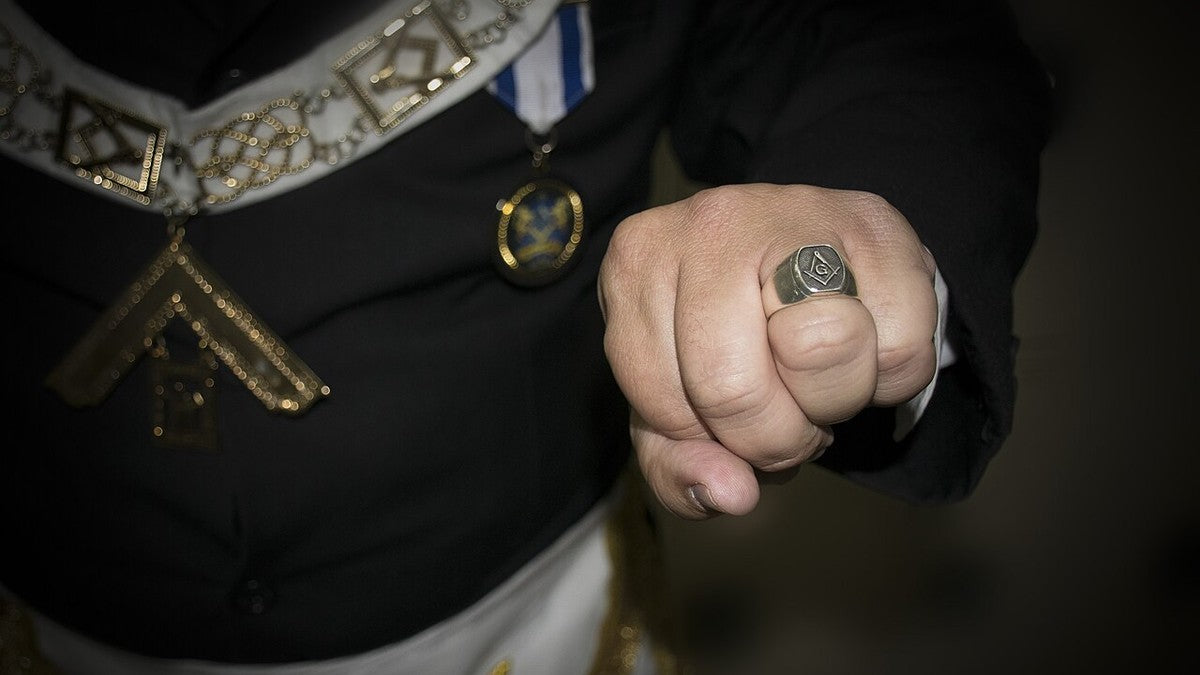
A Masonic ring can be a small object with a deeply personal story. For one wearer, it recalls the evening he became a Master Mason. For another, it is connected to a father, grandfather or mentor. Someone seeing the emblem for the first time may simply wonder what it represents. Understanding Masonic ring meaning starts with the symbols, but it also means allowing room for the individual who wears them.
If you are exploring Freemason rings for yourself or choosing Masonic jewelry as a gift, look beyond the color and shape. Ask which emblem is appropriate, what the design communicates, and whether it suits the wearer’s everyday life. This guide introduces familiar symbolism and offers a thoughtful way to read a ring without assuming that every detail proves a degree, office or affiliation.
What does a Masonic ring represent?
A ring can express a wearer’s connection to Freemasonry and serve as a personal reminder of commitments made within the fraternity. The Grand Lodge of Ohio describes the ring’s association with enduring connection and notes that some members receive rings from relatives when they become Master Masons. That family connection can be just as meaningful as the design itself. 1
Think of the ring as a personal expression, rather than a complete biography. A photograph cannot establish the owner’s lodge membership, and a decorative emblem does not tell you every chapter of someone’s Masonic life. When discussing an inherited ring, separate what you can see from what family records or the original owner can confirm.
The square and compasses
The square and compasses are among the most recognizable symbols associated with Freemasonry. Drawing on the tools of builders, they are used to communicate ethical ideas. The Grand Lodge of Ohio connects the square with fairness and upright conduct, and the compasses with moderation and keeping desires within appropriate limits. 2
On a ring, these tools may appear as a raised emblem, an engraving or a contrasting detail on the face. Some designs are spare and easy to read; others surround the symbol with decorative borders. When comparing rings, enlarge the photograph and look at the clarity of the central emblem. A clear design may be more satisfying to wear than an elaborate one whose details disappear at normal viewing distance.
You may see shoppers use the phrase ‘square and compass ring.’ In traditional Masonic usage, ‘square and compasses’ is the more precise expression. Both searches can lead to similar jewelry, but the symbol should always be described accurately in the product information.
What does the letter G mean?
The letter G appears in many Masonic designs, although it is not present in every version of the emblem. Common explanations connect it with Geometry or God, described in Masonic language as the Great Architect of the Universe. The Grand Lodge of Ohio also notes that its use differs between America and other places, including England. 2
This is a useful reminder when browsing Masonic rings in the USA, Canada or the UK: familiar symbols do not always look identical across traditions. A ring without a G should not automatically be treated as incomplete. If a particular arrangement matters to you, compare it with the customs and guidance of your own lodge.
Color and finish: appearance is not a credential
Blue faces, dark backgrounds and warm gold-tone finishes can create very different impressions. A blue and gold-tone ring may feel formal and traditional, while a silver-tone design may work naturally with jewelry the wearer already owns. These are useful style considerations, but color alone does not establish a Masonic degree.
The same care applies to material descriptions. Gold-tone describes appearance; it does not establish solid gold content. A bright silver-colored surface does not prove sterling silver. Read the specifications for the exact ring and ask questions if a material is not identified. Meaningful symbolism and clear product information should work together.
Can every emblem be treated as interchangeable?
When a ring is described as belonging to a particular Masonic body or role, take that distinction seriously. Do not choose a specialized emblem solely because it looks more elaborate. A thoughtful purchase begins with the recipient’s actual connection to the design, followed by a check of the product photographs and description.
For a gift, it is reasonable to ask which symbols the recipient prefers. A discreet conversation about a ring they already wear can be more useful than trying to guess from a jacket badge or social media photograph. When uncertainty remains, seek their guidance before ordering.
Wearing a ring with confidence
Questions about which hand to use or which direction an emblem should face often come up when someone buys a first Masonic ring. Rather than treating a retailer’s preference as a universal rule, ask your lodge for guidance and consider what is practical for you. Comfort, an appropriate design and respect for your own tradition make a better starting point than an unsupported rule found online.
Also think about how the ring fits alongside other jewelry. A broad signet can become the main visual feature on a hand. A simpler band may be easier to combine with a wedding ring or watch. The right balance depends on the wearer, so choose a design that feels natural rather than one selected only for its size.
An inherited ring has a story worth preserving
If you have a family Masonic ring, photograph the front, sides and any interior markings before seeking help identifying it. Record what relatives know about its owner and approximate age. Keep observations separate from guesses: an inscription can be useful evidence, while a resemblance to another ring is only a starting point.
Avoid polishing away markings or making alterations before getting appropriate advice. A family object does not need to be restored to a new appearance to remain meaningful. Sometimes its most valuable feature is the connection it preserves.
Reading a ring: a practical example
Imagine that you are comparing two rings. One has a clearly visible square and compasses on a plain face; the other combines several small emblems, a colored insert and lettering around the edge. Before deciding which you prefer, write down only the details you can confidently identify. Then compare your observations with the description. This simple exercise separates a visual preference from an assumption about symbolism.
Next, consider why you want the ring. If the purpose is an everyday reminder of your own journey, legibility and comfort may matter most. If it is a family gift, the recipient’s connection to the emblem may be the deciding factor. If you are researching an inherited object, inscriptions and family history may deserve more attention than its resemblance to something currently for sale.
Finally, distinguish the story of the individual piece from the wider tradition. A ring can be meaningful without being antique, made from a precious metal or associated with a famous person. Let the evidence establish its history and the wearer establish its personal significance.
Frequently asked questions about Masonic rings
Is a Freemason ring the same as a Masonic ring? In everyday jewelry shopping, these phrases commonly describe the same general category. The important distinction is the specific emblem, body or role associated with the design. Compare the photographs and written details rather than relying on the search phrase alone.
Does a more expensive ring have greater Masonic significance? Price does not establish personal meaning. When comparing prices, consider the stated materials, construction and design, then decide whether the piece fits your purpose and budget.
Can I buy a Masonic ring as a gift? Yes, but confirm the recipient’s preferred symbol and size. If you want to preserve the surprise, ask someone who knows both their taste and their Masonic affiliation. Avoid guessing that an unfamiliar emblem will be appropriate.
Can the meaning be identified from a photograph? A clear image can help identify visible details, but it cannot confirm everything about the owner or the ring’s history. Combine visual research with inscriptions, family information and relevant lodge guidance.
Choose a symbol that means something to you
Begin with the emblem, confirm the specifications, then consider the color, size and shape. This keeps the purchase grounded in both meaning and everyday use. If you need practical help comparing designs, continue with our guide to choosing a Masonic ring. You can also explore the TrueMasonic Masonic Rings collection and review each product’s individual details before deciding.
Explore the TrueMasonic Masonic Rings collection
Continue reading
- Masonic Regalia Explained: Aprons, Collars, Jewels and Lodge Traditions
- The Three Degrees of Freemasonry: A Guide to the Blue Lodge
Sources and further reading
Photo: Arielinson / Wikimedia Commons, CC BY-SA 4.0. Resized and cropped by TrueMasonic; adapted photograph licensed CC BY-SA 4.0. Used for editorial illustration; no endorsement implied.
