
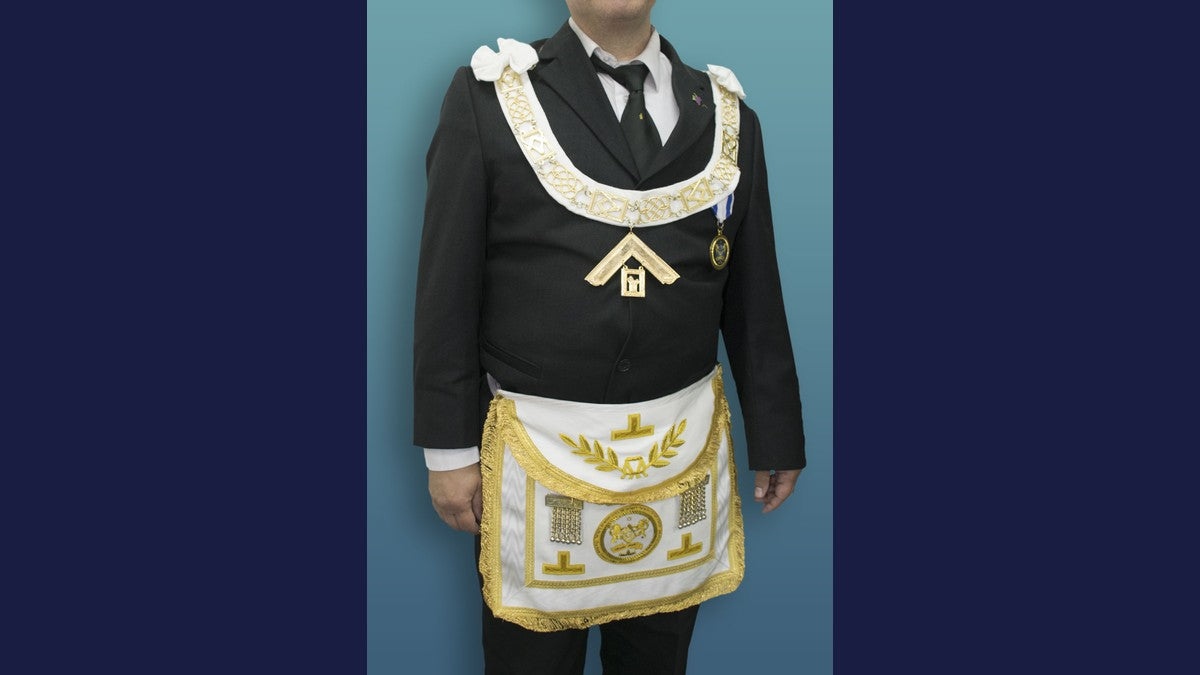
Masonic regalia gives visible form to the traditions of Freemasonry. An apron, a ceremonial collar or a lodge jewel can invite questions about identity, responsibility and belonging. For a new member, the first challenge is often practical: which pieces are appropriate, what do the names mean, and what should be checked before buying? For a family member choosing a gift, those same questions can make a thoughtful purchase feel surprisingly complicated.
This guide to Freemason regalia introduces Masonic aprons, collars, jewels, gloves and related accessories, then explains how to approach selection and care. Whether you are researching Blue Lodge regalia, a Master Mason apron or a meaningful Masonic gift, begin with the wearer’s own lodge. A beautiful item is only a good choice when its design and intended use suit the person receiving it.
What is Masonic regalia?
Masonic regalia is the ceremonial clothing and insignia associated with participation and service in Freemasonry. Aprons are among its most recognizable elements; collars and jewels also appear in lodge settings. UGLE’s public material illustrates both dress and undress Grand Rank aprons and collars, alongside jewels and carrying cases. These examples show why “regalia” is a broader category than a single garment. 3
When researching an item online, separate three questions: what is it called, who is it intended for, and where may it be worn? A product name may answer the first question while leaving the others unclear. Treat photographs and descriptions as the start of your research, then obtain the exact requirements from the lodge secretary or another appropriate lodge officer.
The Masonic apron: history and meaning
The Masonic apron recalls the protective aprons of working stonemasons. In modern Freemasonry, its purpose is symbolic: UGLE connects it with honourable work and the development of moral character. Its history helps explain why such a simple form remains important even when individual examples include elaborate borders or embroidery. 1
For the owner, an apron may also carry a personal story. It might recall an initiation, a presentation from fellow members or years of regular attendance. If an apron has been inherited, record the information that came with it before details are forgotten. A short note naming its owner, lodge and known dates can be more useful to future generations than an unsupported guess about its age or significance.
When comparing Masonic aprons, start with the overall pattern and intended use. Look closely at the body, flap, border, fastening and any attached ornaments. Ask for front and back photographs when either view is missing. A detailed image should help you understand construction as well as appearance; a distant photograph is rarely enough to resolve an uncertain emblem or fastening.
Blue Lodge regalia and the Master Mason apron
Blue Lodge regalia is a common search term, but it should not be treated as a complete specification. The label alone does not tell you which constitution, lodge requirements or pattern a seller has in mind. Similarly, a listing described as a Master Mason apron still needs to be checked against the recipient’s actual requirements. UGLE publishes its own Book of Constitutions; that is a jurisdiction-specific authority, not a worldwide product standard. 4
A useful approach is to obtain a photograph or written specification approved by your lodge before comparing listings. Ask whether you need a personal apron, whether the lodge supplies anything, and whether a particular occasion requires different arrangements. This brief conversation can prevent you from ordering a complete set when only one item is needed.
For buyers in the USA, Canada and the UK, the same practical rule applies: do not assume that a product is suitable solely because it is sold in your country. Ask which Masonic authority’s specification it follows. If you are visiting another lodge, confirm the arrangements with your host rather than relying on a shopping guide to settle questions of protocol.
Masonic collars and jewels: understanding office and service
A Masonic collar provides a prominent setting for a jewel, but the word “jewel” does not necessarily mean a gemstone. The Museum of Freemasonry describes these objects as badges and shows how symbols identify lodge roles. Its examples include the square for the Master, the level for the Senior Warden and the plumb line for the Junior Warden. 2
This makes accurate identification especially important when purchasing a collar or jewel. Write down the exact office, the intended wearer and the approved design. Then check how the jewel attaches, whether it is included in the price, and whether the collar and jewel are being sold together. A photograph showing a complete arrangement does not always explain which components the listing actually includes.
Past Master regalia deserves the same care. The museum’s exhibition connects Past Master jewels with recognition of a former Master’s service. 2 If you are arranging a presentation, confirm the correct emblem and inscription with the lodge before commissioning anything. Check the spelling of the recipient’s name, lodge name, lodge number and dates individually. Ask to approve a written proof before engraving or embroidery begins.
Masonic gloves, sashes and other accessories
When considering Masonic gloves, first ask whether the proposed pair is appropriate for the setting. Then check practical details: material, finger length, seam placement and the supplier’s measuring instructions. A pair that looks smart in a photograph may still be uncomfortable if it restricts movement. If you already own suitable gloves, their fit can provide a useful reference when comparing a replacement.
Apply the same method to sashes, badges and other accessories. Confirm that the item is required before matching its colour to an apron or collar. Buying everything in a matching colour is not a substitute for checking its purpose. Keep a short list of approved items so that browsing does not turn into purchasing pieces you have no occasion to use.
For a regalia case, compare its internal dimensions with the actual items you need to carry. Think about whether an apron can lie comfortably inside, how loose metal pieces will be separated, and whether the handle and closure suit the weight. A compact case is convenient only if it accommodates the contents without unnecessary pressure or folding.
How to choose Masonic regalia: a practical buying checklist
Before ordering, create a simple purchase brief. Include the wearer’s lodge and jurisdiction, the item’s intended use, the confirmed design, the required measurements and the date it is needed. Send that brief to the supplier and ask for clarification wherever a listing is incomplete. This gives both sides a clear reference if a question arises later.
Read material descriptions precisely. Ask what the apron body and lining are made from, how the decoration is applied and what the metal components contain. Descriptions such as gold colour, gold plating and solid gold refer to different things. Likewise, a photograph cannot establish whether embroidery is handmade. Base your decision on explicit specifications rather than assumptions about price or appearance.
Compare value across the whole order. Check whether the quoted price includes the apron belt, jewel, collar, case or personalization shown. For an international order, review delivery estimates and any stated import arrangements. For a presentation with a fixed date, allow time to inspect the item before the event. Obtain the return and alteration terms before approving a customized piece.
Choosing Masonic regalia as a gift
A successful Masonic gift begins with the recipient’s needs. If the purpose is to mark a lodge office or a special presentation, work with someone who knows the approved design. A surprise can still be thoughtful when the technical details are checked discreetly in advance. The surprise need not depend on guessing which regalia the person is entitled or expected to wear.
If those details cannot be confirmed, ask the recipient what would be useful. An appropriate carrying case may be more welcome than a duplicate apron, but even a case needs suitable dimensions. Keep the receipt and written specifications with the gift. For a personalized presentation, include a separate note explaining the occasion so that the story remains with the object.
Caring for aprons, collars and lodge jewels
Follow the maker’s care instructions for each component. An apron can combine different materials, so avoid assuming that a single cleaning method is suitable for its body, lining, embroidery and metal fittings. Do not experiment with household cleaners, polishing compounds or machine washing on an item whose care requirements are unknown. Ask the supplier before treating a mark.
Make inspection part of your routine. Before putting regalia away, check for loose attachments, dampness and signs of strain around fastenings. Store components so that a loose jewel cannot rub against delicate decoration. Choose a clean, dry location away from prolonged direct sunlight, and avoid compressing the contents simply to close a case.
For an old or inherited piece, preservation may matter more than making it look new. Photograph its condition and retain any labels or accompanying documents. If it is fragile, heavily decorated or historically significant, ask a museum or textile conservator for advice before cleaning or repair. An improvised restoration can remove evidence that helps tell its story.
Frequently asked questions about Masonic regalia
Is every Masonic apron suitable for every lodge? Do not make that assumption. Obtain your lodge’s specification and compare the item with it before buying. A familiar symbol or colour is not enough to confirm suitability.
What is a Masonic jewel? In this context, it is a badge associated with Masonic identity, office or recognition. The Museum of Freemasonry’s examples show why the term should not be read as a promise that precious stones are included. 2
Should I buy a complete regalia set? Only after confirming what you need. List the individual components and compare that list with the contents of the proposed set. Check what your lodge supplies before duplicating it.
Can a Masonic ring replace lodge regalia? Treat a ring purchase and a regalia requirement as separate decisions. Follow your lodge’s instructions about ceremonial dress; do not assume that a piece of personal jewelry fulfils those requirements.
What should I ask before ordering custom regalia? Confirm the approved design, materials, measurements, spelling, production time and return terms. Request a clear proof of any personalized text, and keep the final approved specification.
Make meaning and suitability your starting point
Choosing Masonic regalia is easier when you begin with purpose. Identify the correct item, confirm the design, inspect the specifications and plan for its care. That approach respects both the tradition behind the object and the practical needs of the person who will wear it. At TrueMasonic, our educational guides help you explore Masonic symbolism so that you can make more informed choices about meaningful accessories and gifts.
Explore the TrueMasonic Masonic Rings collection
Continue reading
- Masonic Ring Meaning: Symbols, Tradition and Personal Significance
- The Three Degrees of Freemasonry: A Guide to the Blue Lodge
Sources and further reading
- United Grand Lodge of England — Why Freemasons Wear Aprons
- Museum of Freemasonry — Bejewelled: Role and Rank
- United Grand Lodge of England — Annual Investiture and Grand Rank Regalia
- United Grand Lodge of England — Book of Constitutions
Photo: Arielinson / Wikimedia Commons, CC BY-SA 4.0. Resized and cropped or framed by TrueMasonic; adapted photograph licensed CC BY-SA 4.0. Used for editorial illustration; no endorsement implied.
